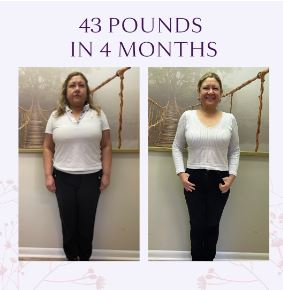

Most adults on tirzepatide lose a meaningful share of their body weight, but results vary from person to person. In the largest clinical trial of adults with obesity and without diabetes, average weight loss was 15% to 20.9% of starting weight after 72 weeks, depending on dose. That worked out to roughly 35 to 52 pounds. Your own result may be lower or higher.
This guide covers the average weight loss on tirzepatide, how progress tends to unfold month by month, what shapes your results, and what to discuss with a clinician first.
What Is the Average Weight Loss on Tirzepatide?
The average weight loss on tirzepatide in the SURMOUNT-1 trial was 15% to 20.9% at 72 weeks. The trial enrolled 2,539 adults with obesity, or overweight plus a weight-related condition, and without diabetes. Everyone also received lifestyle support. Results from the SURMOUNT-1 trial summary by dose:
- 5 mg weekly: 15% average loss (about 35 pounds)
- 10 mg weekly: 19.5% (about 49 pounds)
- 15 mg weekly: 20.9% (about 52 pounds)
- Placebo: 3.1% (about 5 pounds)
Between 85% and 91% of tirzepatide participants lost at least 5% of their body weight, compared with 35% on placebo. Between 30% and 57% lost 20% or more, depending on dose.
These are averages. Response varied, and a small share of participants did not lose weight. People with type 2 diabetes generally lost somewhat less in separate trials. For a realistic picture of what changes look like, see these before-and-after weight loss expectations.
Tirzepatide Weight Loss Results by Month
There is no official month-by-month chart. Progress follows the dose schedule, which starts low and rises gradually. This table is a general framework based on the FDA-approved dosing steps and the trial design, not a prediction of pounds lost.
| Timeframe | Typical dosing step | What to expect |
|---|---|---|
| Month 1 | 2.5 mg weekly starter dose | Your body adjusts. The label describes this dose as for treatment initiation, not long-term use. |
| Months 2 to 5 | Increases of 2.5 mg, at least 4 weeks apart | Weight loss builds as doses rise. Stomach side effects are most common during this stage. |
| Months 5 to 18 | Maintenance dose of 5, 10, or 15 mg | Trial participants reached their target dose by week 20. Loss continued through week 72, usually at a slower pace. |
Because the first month uses a starter dose, early results are often modest. Here is what the first month on a GLP-1 medication typically involves.
What Affects How Much Weight You Lose on Tirzepatide?
Your dose, tolerance, and daily habits matter most, though several other factors play a role:
- Dose reached and tolerated. Some people stay on a lower maintenance dose because of side effects.
- Starting weight. People with a higher starting weight often lose more pounds, even when the percentage is similar.
- Nutrition and activity. The medication is approved alongside a reduced-calorie diet and more physical activity.
- Medical factors. Type 2 diabetes, hormonal changes, sleep, stress, and other medications can all shift results.
- Consistency. Missed doses and gaps in treatment can slow progress.
A supervised medical weight loss program can help you adjust the plan as your body responds.
Does Weight Loss Last After You Stop Tirzepatide?
Weight regain is common after stopping. Weight regain is common after stopping. In the SURMOUNT-4 trial, adults who switched from tirzepatide to placebo regained an average of 14% of their body weight over the next year, while those who kept taking it lost a further 5.5%. This is why obesity medications are generally viewed as long-term care. Planning for maintenance, including nutrition, strength training, and follow-up visits, matters as much as the initial loss.
Side Effects and Safety to Understand First
The most common side effects are nausea, diarrhea, vomiting, and constipation. In SURMOUNT-1, between 4.3% and 7.1% of tirzepatide participants stopped treatment because of side effects, versus 2.6% on placebo.
The FDA prescribing information carries a boxed warning about thyroid C-cell tumors seen in rats. Tirzepatide is contraindicated for people with a personal or family history of medullary thyroid carcinoma or Multiple Endocrine Neoplasia syndrome type 2. Labels can change, so confirm current details with your prescriber.
Fast loss can also affect skin. Read about managing loose skin after major weight loss before you set goals.
Average Weight Loss on Tirzepatide in Clinical Trials
Average loss on tirzepatide ranges from about 15% to 21% of body weight over 72 weeks in clinical trials, with progress that builds as the dose rises. Your outcome depends on dose, health history, lifestyle, and consistency, and maintaining results typically takes ongoing support. Treat the trial numbers as a benchmark, not a promise.
Talk With a Provider About Your Options
If you are weighing tirzepatide, a medical review with Dr. B, a physician certified in aesthetic medicine with over 20 years of experience in Internal Medicine, can show whether it fits your health history and goals. She will go over your medical history, set realistic expectations, and explain the benefits and risks. Request a consultation at our Northeast Philadelphia clinic to review your options.
Areas served: Abington, Delaware, Southampton, Maryland, Allentown, Horsham, and Huntingdon Valley.
Frequently Asked Questions
How fast do you lose weight on tirzepatide?
Most people lose gradually, not all at once. Doses start low and rise every four weeks or more, so early months are usually slower than later ones. The trial's largest losses came over 72 weeks. Your clinician can set realistic early targets based on your dose and tolerance.
Does a higher dose mean more weight loss?
Not always. The 15 mg dose averaged 20.9% loss, compared with 19.5% at 10 mg and 15% at 5 mg. The gap between 10 mg and 15 mg was small. The best dose balances results with side effects.
Will I regain weight if I stop tirzepatide?
Regain is common after stopping the medication. Lasting results usually depend on continued treatment plus sustained nutrition and activity habits. Discuss a maintenance plan with your provider before you stop.
Is tirzepatide the same as Mounjaro or Zepbound?
They share the same active ingredient. Zepbound is the brand approved for chronic weight management, while Mounjaro is approved for type 2 diabetes. Your provider can explain which applies to you, and these Mounjaro-based weight loss options give more background.
Who should not take tirzepatide?
People with a personal or family history of medullary thyroid carcinoma or MEN 2 should not take it. The label also advises stopping if pregnancy is recognized. A medical history review is essential before starting.
Does tirzepatide cause more weight loss than semaglutide?
Studies so far generally show a larger average loss with tirzepatide, but individual results differ, and tolerability and cost matter too. See how tirzepatide compares with semaglutide for a side-by-side look.
Educational information; your clinician can advise on care that is appropriate for you.