
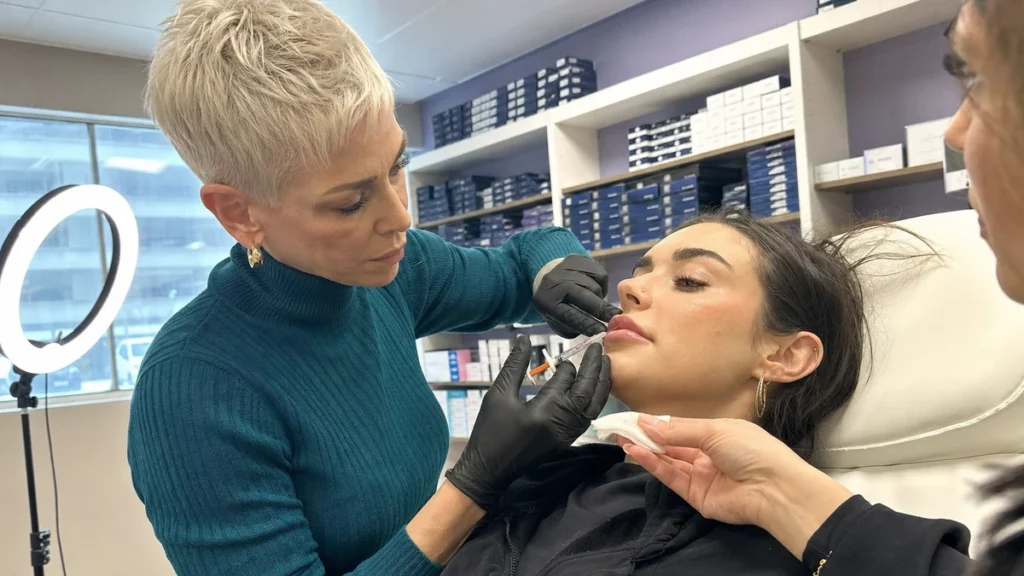
Most hyaluronic acid dermal fillers last roughly 6 to 24 months, depending on the area treated, the product used, and your own body. So, how long do dermal fillers last on your face? Lips and smile lines tend to soften sooner, while cheeks and chin often hold results longer. This guide covers dermal filler longevity by treatment area, what shortens or extends results, and when to plan a touch-up. The timelines here are general ranges, not promises. A qualified provider can estimate more precisely after assessing your face and the product chosen for your facial filler treatments.
How Long Do Facial Fillers Last in Different Areas?
Here is the short answer. These ranges apply to common hyaluronic acid (HA) fillers. HA is a sugar-like substance your skin already makes, and it holds water to add volume and smoothness.
| Treatment area | Typical range* |
| Cheeks and midface | 12 to 24 months |
| Temples | 12 to 18 months |
| Chin | 12 to 18 months |
| Jawline | 12 to 18 months |
| Smile lines (nasolabial folds) | 6 to 12 months, sometimes longer |
| Marionette lines | 6 to 12 months |
| Under-eyes (tear troughs) | 6 to 12 months, sometimes longer |
| Lips | 6 to 12 months |
*General estimates only. Actual results vary by person, product, and technique.
Why Fillers Last Longer in Some Areas Than Others
Two things drive most of the difference: movement and product choice. Areas that move constantly, like the lips and the lines around the mouth, break filler down faster. Areas that stay fairly still, like the cheeks and chin, usually keep results longer.
Product matters just as much. Thicker, more structured gels are typically chosen for deeper areas, while softer gels suit delicate skin. Brands such as Juvederm fillers come in several formulations, each designed for a particular depth and purpose.
Dermal Filler Longevity by Treatment Area
Cheeks and Midface
Cheek filler often lasts the longest, commonly 12 to 24 months. The cheeks are injected deeper and move less than other areas, so the gel holds its shape well.
Lips
Lip filler usually lasts 6 to 12 months. The lips are highly mobile, so results fade faster than almost anywhere else. There are ways to extend the life of lip fillers between visits.
Smile Lines and Marionette Lines
Filler in the lines running from the nose to the mouth, or from the mouth corners down toward the chin, typically lasts 6 to 12 months. Constant talking, chewing, and smiling wear it down. Some people reach 18 months with denser products.
Under-Eyes
Tear trough filler often lasts 6 to 12 months, and some people see results beyond that. The skin here is thin, so providers usually choose a soft, flexible gel.
Chin and Jawline
Chin and jawline filler commonly lasts about 12 months, and some people see results a little longer, because the product sits over firm structure and moves little.” and “Temple filler generally lasts about 12 to 13 months in clinical studies, and some people see results a little longer. It softens a hollowed look at the sides of the forehead, so the face looks more balanced and rested. Patients seeking sharper contour can review jawline filler options before booking.
These jawline filler tips can help you prepare.
Temples
Temple filler generally lasts 12 to 18 months.
What Affects How Long Dermal Fillers Last?
Beyond the treatment area, several personal and practical factors shape your results:
- Product type: Thicker, more cross-linked gels generally last longer than softer ones.
- Amount injected: More product can last longer, but only when it suits your anatomy.
- Metabolism: Some bodies break down HA faster than others.
- Lifestyle: Heavy sun exposure, smoking, and intense workouts may shorten results, though research on exercise is limited.
- Injector skill: Correct depth and placement affect both look and longevity.
The FDA regulates dermal fillers as medical devices and approves specific products for specific uses, so ask your provider which approved product is right for each area. You can read more in the FDA’s guide to dermal fillers (soft tissue fillers).
How to Help Your Fillers Last Longer
There is no way to make filler permanent, but a few habits can help you get the most from each treatment:
- Wear daily sunscreen, since UV exposure breaks down skin structure.
- Follow aftercare instructions, including avoiding heavy pressure on treated areas early on.
- Stay hydrated and keep a consistent skincare routine.
- Book touch-ups before results fade completely, which may mean needing less product.
Some patients also pair fillers with skin-quality treatments such as collagen-boosting microneedling or a PRP facial rejuvenation approach, which supports the skin that fillers sit beneath.
Are Dermal Fillers Worth It Given How Long They Last?
It depends on your goals and budget, since fillers are temporary and need maintenance. Cost varies by provider, product, and amount, so confirm pricing during a consultation. For a balanced look at value, read whether dermal fillers are worth the investment.
Fillers also do not treat every concern. Fillers restore volume, while wrinkle relaxers like Botox injections soften lines caused by muscle movement. The difference between Botox and dermal fillers is worth understanding before you choose.
Final Takeaway on Dermal Filler Longevity
So, how long do dermal fillers last? Expect about 6 to 12 months in the lips, smile lines, and under-eyes, 12 to 24 months in the cheeks, and about a year, sometimes longer, in the temples, chin, and jawline.
Compare Your Filler Options With a Qualified Provider
If you are weighing your options, a consultation can show which areas, products, and timelines fit your goals. Explore available services at Avellina Aesthetics and speak with a qualified professional about a plan built around your face.
Patients visit our team from Abington, Delaware, Southampton, Maryland, Allentown, Horsham, and Huntingdon Valley Valley for dermal filler consultations and treatments.
Frequently Asked Questions
How long do dermal fillers last on average?
Most hyaluronic acid fillers last about 6 to 18 months, with some cheek products lasting up to two years. The range depends on the treatment area, the product, and your metabolism. Lips and smile lines usually fade first, while cheeks, chin, and jawline tend to last longer.
Which area of the face holds filler the longest?
The cheeks and midface typically hold filler the longest, often 12 to 24 months. These areas are injected deeper and move less than the mouth area, so the gel breaks down more slowly. Chin and jawline results often last about a year, sometimes longer.
Why do lip fillers fade faster than cheek fillers?
Lip filler fades faster because the lips move constantly and have a rich blood supply. This combination speeds up how quickly the body breaks down hyaluronic acid. Cheek filler sits deeper and experiences far less movement, so it generally lasts longer.
Do dermal fillers wear off suddenly or gradually?
Fillers wear off gradually. Most people notice volume softening slowly over several months rather than disappearing overnight.
Can I get a touch-up before my filler fully fades?
Yes, a touch-up before filler fully fades is common and is often recommended. Adding a small amount to existing product can maintain results with less overall volume. Your provider will assess what remains and advise on timing and amount.
Educational information; your clinician can advise on care that is appropriate for you.