Botox vs dermal filler comes down to one question: is your concern caused by muscle movement or by lost volume? Botox relaxes the muscles behind expression lines like frown lines and crow’s feet. Dermal fillers add volume or support to areas that look hollow, flat, or creased even when your face is at rest.
Knowing the difference between Botox and dermal fillers helps you avoid paying for a treatment that won’t fix your concern. This guide explains how each works, which wrinkles each treats best, when they’re combined, what the risks are, and how to prepare for a consultation. Results vary from person to person, so a licensed provider should confirm what suits your face.
Botox vs Dermal Filler at a Glance
| Botox | Dermal Filler | |
|---|---|---|
| What it is | Purified botulinum toxin type A | Gel injected under the skin, commonly hyaluronic acid |
| How it works | Relaxes targeted muscles | Adds volume and structure |
| Best for | Expression lines (forehead, frown, crow’s feet) | Folds, hollow areas, lips, cheeks, jawline |
| Typical duration | Often around 3–4 months | Roughly 6 months to 2 years, depending on product and area |
| Results appear | Within days to about two weeks | Immediately, once initial swelling settles |
How Botox Works
Botox is a prescription neuromodulator. It temporarily blocks the signals that tell a muscle to contract, so the skin above it smooths out. The FDA has approved Botox Cosmetic for specific areas, including frown lines, forehead lines, and crow’s feet.
Because it works on muscle, Botox suits “dynamic” wrinkles, the ones that appear when you squint, frown, or raise your eyebrows. If you’re curious about Botox injections for expression lines, a consultation will map which muscles are driving your lines. Results are temporary, and how long Botox results typically last depends on your metabolism, dose, and treatment area.
How Dermal Fillers Work
Dermal fillers are gels placed beneath the skin to restore volume, smooth deeper folds, or reshape features. Most are made from hyaluronic acid, a substance the body naturally produces. Other types include poly-L-lactic acid, which stimulates collagen, and calcium hydroxylapatite. The main filler materials and how they differ affect how natural they look and how long they last.
Fillers aren’t limited to the face. Hyaluronic acid filler is also used off-label, meaning it is not FDA-approved for this purpose, for penile girth enhancement. This treatment calls for a private, detailed consultation about risks, realistic expectations, and whether it is appropriate for you.
Botox or Fillers for Wrinkles: Which Works Better?
Neither is better overall. Each treats a different type of wrinkle.
Choose Botox when lines appear with movement and fade when your face relaxes. Typical examples are horizontal forehead lines, the “11s” between the brows, and treating crow’s feet with Botox.
Choose filler when lines or folds are visible at rest, or when volume loss is the cause. Typical examples are nasolabial folds (from nose to mouth), marionette lines, thinning lips, and flattened cheeks. Our guide to how fillers smooth wrinkles covers the mechanism in more detail.
Many people have both types of lines. A common scenario is someone in their late 30s with frown lines and early cheek flattening. Botox softens the frown, while filler restores midface support.
Which Treatment Matches Your Concern?
- Forehead and frown lines: Botox
- Crow’s feet: Botox
- Deep lines around the nose and mouth: Filler
- Hollow cheeks or temples: Filler
- Thin lips or lip definition: Filler
- Jawline or chin definition: Filler
- Lines from both movement and volume loss: Often a combination, based on assessment
Can You Use Botox and Fillers Together?
Yes, and providers often combine them. Botox reduces the muscle activity that deepens lines, and filler rebuilds lost structure. Treating both can give a more balanced result than using one product alone, and sometimes lets you use less filler.
Combination plans are usually staged and customized. They aren’t a package everyone needs, and more product isn’t always better.
Safety and Side Effects
Both treatments are generally considered safe when performed by trained, licensed professionals, but neither is risk-free.
Botox side effects can include bruising, headache, and temporary eyelid or brow drooping if the product spreads to nearby muscles. Fillers can cause swelling, bruising, lumps, or asymmetry. Rarely, filler can block a blood vessel, which is an emergency that needs immediate care. Hyaluronic acid fillers can be dissolved with an enzyme called hyaluronidase. Botox cannot be reversed and has to wear off.
Only products approved by the FDA and purchased from legitimate sources should be used, and the American Society of Plastic Surgeons advises patients to check an injector’s training. Why injector experience matters is worth understanding before you book.
How Much Do Botox and Fillers Cost?
Botox is usually priced per unit or per area, while fillers are priced per syringe. Actual costs vary by provider, region, product, amount used, and how many areas you treat. Fillers often cost more per session but may last longer. Ask for a written quote at your consultation, and ask what touch-ups or follow-ups are included.
How to Prepare for Your Consultation
- List your concerns and when you notice them (at rest or with expression).
- Share your medical history, medications, and supplements, especially blood thinners.
- Ask which product is recommended and why.
- Ask about risks, downtime, and expected longevity.
- Review how to prepare for a first filler appointment if filler is an option.
Compare Your Options With a Qualified Provider
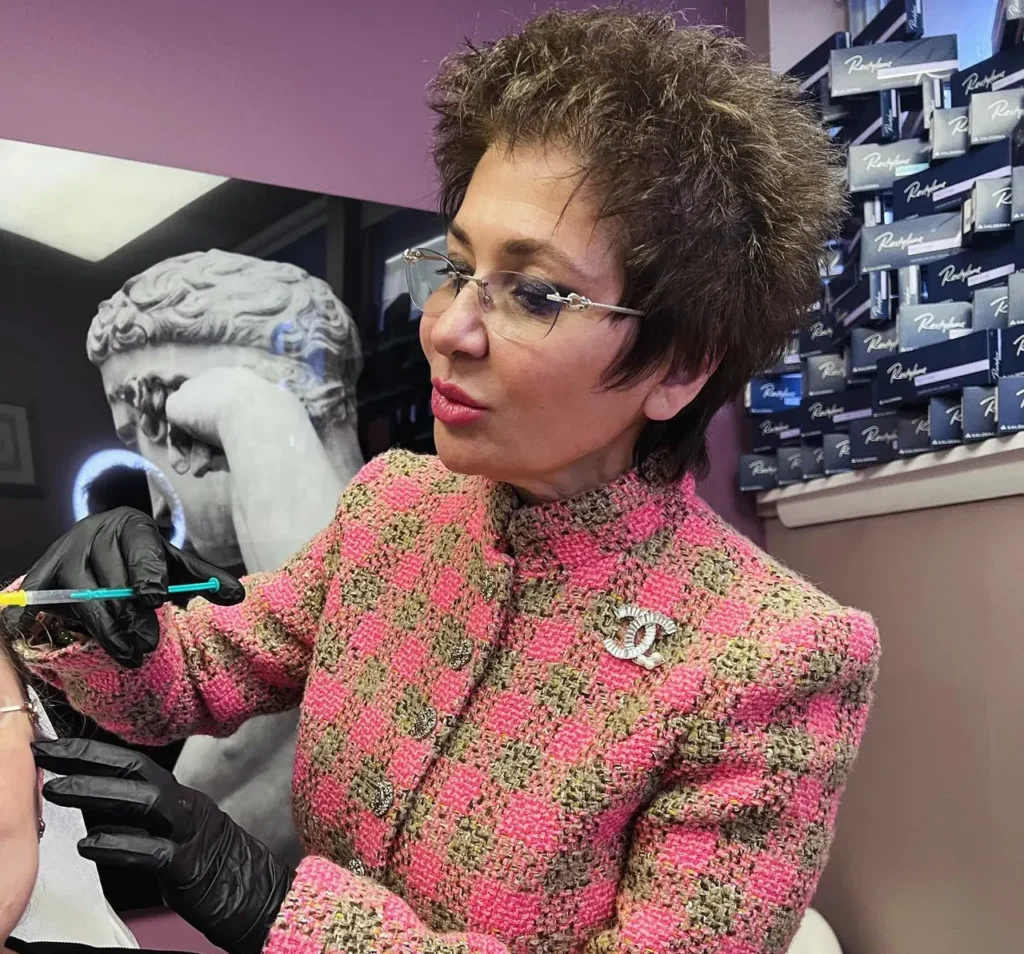
The best choice depends on whether your lines come from movement, volume loss, or both. A consultation with Dr. B, a physician certified in aesthetic medicine with over 20 years of experience in Internal Medicine, can confirm what your face needs and give you a personalized plan and cost estimate. Every treatment is performed by Dr. B herself, with a focus on subtle, natural-looking results. Book your visit at our Northeast Philadelphia clinic and bring your questions.
Avellina Aesthetics serves patients from Abington, Southampton, Maryland, Allentown, Horsham, and Huntingdon.
Frequently Asked Questions
What is the main difference between Botox and filler?
Botox relaxes muscles to soften expression lines, while filler adds volume or support under the skin. Botox treats movement-related wrinkles. Filler treats volume loss, folds, and facial contour.
Which lasts longer, Botox or filler?
Filler often lasts longer. Botox typically lasts about 3–4 months, while hyaluronic acid fillers may last from around 6 months to 2 years depending on the product and area.
Is Botox or filler better for forehead lines?
Botox is usually the better choice. Forehead lines come from repeated muscle movement, which Botox reduces. Filler is rarely used there.
Does filler hurt more than Botox?
Botox injections are quick and typically feel like small pinches. Filler can feel more uncomfortable, though many products contain numbing agents, and a numbing cream is often applied first.
Can I get Botox and filler on the same day?
Often yes, if your provider recommends it. Some providers prefer staging treatments to assess results, so follow your injector's advice.
Educational information; your clinician can advise on care that is appropriate for you.