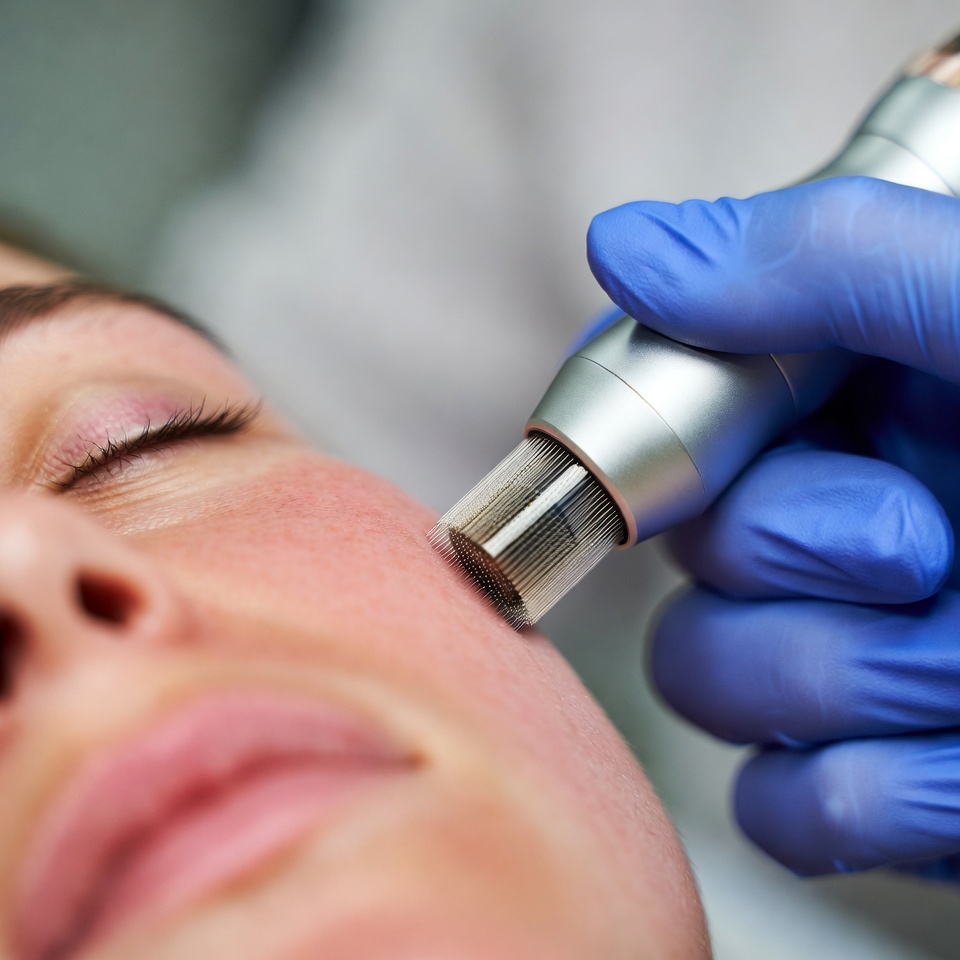

Dermal fillers are gel-like substances injected beneath the skin to restore lost volume, soften lines, and refine facial contours. Want to restore lost fullness or soften deeper folds without surgery? Dermal fillers may be worth discussing with a qualified medical provider, who can assess your health, concerns, and treatment options.
Results vary because skin quality, facial anatomy, the product chosen, the amount used, and the injector’s technique all shape the outcome. This guide covers how fillers work, the benefits of dermal fillers, who is a good candidate for dermal fillers, who should wait, and the risks and costs to weigh before a consultation.
What Are Dermal Fillers and How Do They Work?
Dermal fillers are injectable medical devices that add volume under the skin. The U.S. Food and Drug Administration describes them as implants approved to create a smoother or fuller appearance in areas such as the nasolabial folds, cheeks, chin, lips, and the backs of the hands, according to the FDA overview of soft tissue fillers.
Most fillers used today are absorbable, meaning the body breaks them down gradually. The most common material is hyaluronic acid, which occurs naturally in skin and holds water. Others, such as calcium hydroxylapatite and poly-L-lactic acid, also stimulate collagen. Each behaves differently, so it helps to understand the main filler materials and what each one does before your visit.
Benefits of Dermal Fillers
The main benefit of dermal fillers is a visible improvement in volume and contour with little downtime. Key advantages include:
- Restored volume. Fillers can rebuild fullness in flat cheeks, thin lips, or a weak chin.
- Softer folds. Lines that remain at rest, such as smile lines, can look less deep.
- Quick results. Hyaluronic acid fillers work right away, though swelling takes a week or two to settle.
- Little downtime. Most people can return to everyday activities the same day, but strenuous exercise should generally wait 24–48 hours, following your provider’s instructions.
- Adjustability. Hyaluronic acid fillers can be dissolved with an enzyme called hyaluronidase if a correction is needed.
Subtle improvement is the realistic goal, and reviewing what realistic filler results look like can help set expectations.
Who Is a Good Candidate for Dermal Fillers?
A good candidate for dermal fillers is a healthy adult with volume loss or static folds and realistic expectations. You are likely suitable if you:
- Are 22 or older, the age group for which the FDA has approved dermal fillers
- Are in good overall health
- Notice hollowing, flattening, or folds that remain when your face is relaxed
- Want improvement, not perfection, and accept that results vary
- Are comfortable with maintenance visits, since most fillers are temporary
Consider a common scenario: someone in their forties notices flatter cheeks and smile lines that stay visible at rest. That pattern points to volume loss, which fillers address well. Forehead lines that appear only when you raise your eyebrows are usually better treated with a neuromodulator such as Botox®, which relaxes muscle instead of adding volume.
Candidacy is a medical judgment. A provider should review your health history, medications, and goals before recommending a personalized filler treatment plan.
Who Should Wait or Consider Alternatives?
Fillers are not right for everyone. A provider will often recommend waiting or choosing another option if you:
- Are pregnant or breastfeeding, because safety has not been established in these groups
- Have an active infection, cold sore, or inflammation near the injection site
- Have a history of severe allergic reactions or an allergy to a filler ingredient or lidocaine
- Have a bleeding disorder or take blood thinners, which you should discuss with your prescribing doctor and never stop on your own
- Have significant loose skin, which may respond better to skin tightening or surgery
Bring a full list of medications and supplements to your consultation, and review the safety questions first-time patients should ask.
Risks and Limitations to Weigh
Common side effects include bruising, swelling, redness, and tenderness, which often settle within days to weeks. Lumps or nodules can also occur and may need treatment, so contact your provider about persistent, painful, or worsening changes.
Serious complications are uncommon but can be permanent: filler entering a blood vessel can cause tissue death, blindness, or stroke. Seek immediate medical attention for unusual pain, vision changes, white, gray, or blue skin near the injection site, or stroke symptoms during or shortly after treatment. Never buy fillers online or use needle-free filler devices.
These risks are why provider choice matters more than price. Look for a licensed medical professional trained in facial anatomy, and read about why injector training and experience matter before deciding.
How Long Do Results Last, and What Affects the Cost?
How long fillers last depends on the material and the area treated. Many hyaluronic acid fillers last roughly six to twelve months, and some collagen-stimulating products last longer. High-movement areas such as the lips tend to fade sooner.
Cost varies widely, so be cautious of any single number you see online. Fillers are usually priced per syringe, and the total depends on the product, the number of syringes, the provider’s credentials, and your local market. Insurance generally does not cover cosmetic treatment, so ask for a written quote.
Talk Through Your Options With a Qualified Provider
Dermal fillers can be a good fit if volume loss or resting folds are your main concern, you are in good health, and you want a natural-looking refresh without surgery. They are less suited to significant skin laxity, and their safety depends heavily on who performs the injection. The best next step is an in-person assessment where a medical professional examines your face, reviews your history, and explains your options. You can schedule a consultation with a qualified provider to review your choices.
Avellina Aesthetics is based in Philadelphia and welcomes patients from Abington, Horsham, Southampton, Huntingdon Valley, and Allentown, as well as visitors traveling from Delaware and Maryland.
Frequently Asked Questions
Are dermal fillers safe?
Fillers are generally considered safe when an FDA-approved product is injected by a trained, licensed medical professional. Most side effects are minor and short-lived. Serious problems, such as a blocked blood vessel, are uncommon but possible, which is why a medical setting and an experienced injector matter.
Do dermal fillers hurt?
Most people describe filler injections as mildly uncomfortable, not painful. Many products contain lidocaine, a numbing agent, and providers often apply a topical anesthetic first. Sensitive areas such as the lips are usually felt more than the cheeks or chin.
How soon will I see results from fillers?
You will usually see a change right after treatment with hyaluronic acid fillers. Swelling can make the area look fuller at first, so the settled result is typically clearer after about two weeks. Results depend on the material: poly-L-lactic acid develops results gradually, while calcium hydroxylapatite can provide visible fullness immediately.
Can dermal fillers be reversed?
It depends on the product. Hyaluronic acid fillers can usually be dissolved with an injected enzyme called hyaluronidase, but other filler materials do not respond to it. Some fillers gradually break down, while permanent fillers do not; correction or removal can be difficult and carries its own risks. If reversibility matters to you, discuss it before choosing a product. If reversibility is important to you, mention it when discussing product options.
What is the best age to start dermal fillers?
There is no single best age. The FDA has approved dermal fillers for adults 22 and older, and the right timing depends on your anatomy and concerns. Some people seek lip or chin enhancement in their twenties, while others start when volume loss appears later.
Educational information; your clinician can advise on care that is appropriate for you.