
If you’ve noticed more hair on your pillow, a widening part, or a hairline that seems to creep back a little further each year, you’re not imagining it, and you’re not alone. Hair loss affects millions of men and women, and it rarely resolves on its own once it starts. The good news is that hair loss treatment in Abington, PA has come a long way from harsh chemicals and risky surgery. Today, non-surgical options like PRP therapy and medical-grade mesotherapy can slow shedding, revive weakened follicles, and support real, visible regrowth for many patients.
This page walks through why hair loss happens, which treatments actually work, and what a typical visit looks like, so you can make a confident decision about your next step.
What Causes Hair Loss?
Hair loss, medically known as alopecia, isn’t a single condition — it’s a symptom with several possible root causes. Understanding what’s driving your hair loss is the first step toward choosing a treatment that actually works.
Common causes include:
- Androgenetic alopecia (hereditary hair loss): The most common cause in both men and women, driven by genetics and sensitivity to a hormone byproduct called DHT (dihydrotestosterone), which shrinks hair follicles over time.
- Hormonal changes: Pregnancy, menopause, thyroid disorders, and PCOS can all disrupt the normal hair growth cycle.
- Telogen effluvium: A temporary but sometimes dramatic shedding phase triggered by stress, illness, surgery, rapid weight loss, or nutritional deficiencies.
- Nutrient deficiencies: Low iron, vitamin D, zinc, or protein intake can weaken hair shafts and slow regrowth.
- Scalp conditions: Chronic inflammation, dandruff, or folliculitis can damage the follicle environment needed for healthy hair.
- Medications and medical treatments: Certain blood pressure medications, antidepressants, and chemotherapy drugs list hair thinning as a side effect.
Signs You Shouldn’t Ignore
Early intervention makes a meaningful difference in outcomes. Pay attention if you notice a widening part line, increased shedding on your brush or pillow, a receding hairline, or thinning at the crown. Catching these changes early gives non-surgical treatments a much better chance of preserving existing follicles rather than reviving ones that have gone dormant for years.
Hair Loss Treatment Options in Abington, PA
There isn't a one-size-fits-all fix for hair loss, which is why an experienced provider evaluates your scalp, hair loss pattern, and medical history before recommending a plan. Here are the primary treatment approaches available.
PRP Therapy (Platelet-Rich Plasma)
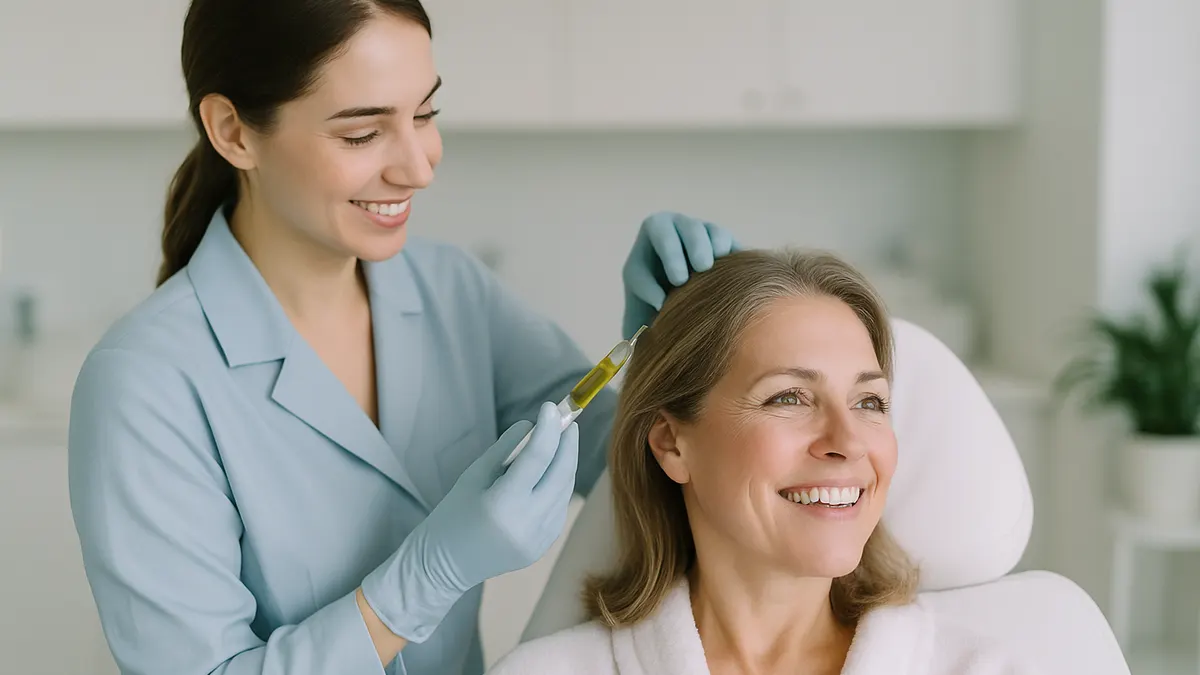
Many patients start with platelet-rich plasma injections, which use concentrated growth factors drawn from your own blood to awaken weakened follicles and encourage new hair to grow. A small blood sample is spun in a centrifuge to isolate the platelet-rich portion, which is then injected into targeted areas of the scalp. Because the treatment uses your own biological material, there’s minimal risk of allergic reaction, and most patients return to normal activities the same day.
Mesotherapy for the Scalp
For patients who prefer a non-blood-based option, medical-grade mesotherapy for hair loss delivers a customized blend of vitamins, minerals, and amino acids directly into the scalp’s mid-layer. This nourishes the follicle environment, improves microcirculation, and can be especially helpful for people whose thinning is linked to nutritional gaps or early-stage shedding.
Medical-Grade Topical and Supportive Treatments
Depending on your evaluation, your provider may also recommend supportive topical treatments or scalp serums designed to extend the growth phase of the hair cycle and reduce further miniaturization of follicles. These are often paired with in-office procedures for a more complete approach.
Understanding Your Options at a Glance
| Treatment | Best For | Downtime | Typical Timeline |
| PRP Therapy | Early to moderate thinning, hereditary hair loss | None to minimal | Visible results in 3–6 months |
| Mesotherapy | Nutrient-related thinning, scalp health support | None | Gradual improvement over 8–12 weeks |
| Topical/supportive care | Maintenance, prevention of further loss | None | Ongoing, cumulative benefit |
Choosing between a surgical and non-surgical path becomes much easier once you understand how PRP compares with a hair transplant across recovery time, cost, and long-term results, since not every case of thinning requires an invasive procedure.
How the Treatment Process Works
- Consultation and scalp evaluation. Your provider examines your scalp, discusses your hair loss history and family pattern, and may review recent bloodwork if a nutritional or hormonal cause is suspected.
- Personalized treatment plan. Based on the cause and severity of your thinning, a plan is built around PRP, mesotherapy, or a combination of both.
- In-office treatment session. Most sessions take 30–45 minutes. A numbing cream is typically applied first for comfort.
- Recovery and aftercare. There’s little to no downtime. Mild redness or tenderness at the injection sites usually resolves within a day or two.
- Follow-up sessions. Because hair grows in cycles, most treatment plans involve a series of sessions spaced several weeks apart, followed by periodic maintenance visits.
Why Choose Avellina Aesthetics for Hair Restoration
Abington residents dealing with hair thinning deserve a provider who treats the whole picture — not just the symptom. A thorough evaluation matters because the underlying causes of hair loss and the restoration options available vary so widely from patient to patient; what works for hereditary thinning won’t necessarily help someone recovering from a stressful medical event or a temporary shedding phase.
An experienced team approaches hair restoration with a real diagnostic process, treatments backed by clinical research, and honest expectations about timelines and results. Not everyone is a candidate for every treatment, and a trustworthy provider will tell you that upfront.
What Results Typically Look Like
Most patients don’t see overnight transformation — and any provider who promises that should raise a red flag. Instead, expect:
- Reduced shedding within the first 4–8 weeks
- Finer “peach fuzz” regrowth appearing around months 2–4
- Noticeably thicker coverage by months 4–6
- Continued improvement with maintenance sessions over the following year
Results vary based on the cause and duration of hair loss, age, and how consistently a patient follows the recommended treatment schedule.
Take the Next Step Toward Fuller Hair
Hair loss can feel discouraging, but it’s rarely permanent when it’s addressed early with the right combination of treatments. Whether the cause is genetics, hormones, stress, or nutrition, a personalized plan built around PRP therapy, mesotherapy, or supportive scalp care can help restore both your hair and your confidence.
If you’re ready to explore hair loss treatment in Abington, PA, a licensed and experienced team at Avellina Aesthetics can evaluate your scalp, explain your options in plain language, and build a plan suited to your specific pattern of thinning.
Avellina Aesthetics also serves patients throughout Philadelphia, Southampton, Abington, Allentown, Bucks County, Horsham, and Huntingdon Valley who are looking for effective, medically guided hair restoration close to home.
Frequently Asked Questions
Yes. Hereditary and hormonal hair loss affect both men and women, and treatments like PRP and mesotherapy are tailored to each patient's pattern of thinning rather than a one-size-fits-all protocol.
Most patients complete an initial series of three to four sessions spaced four to six weeks apart, followed by maintenance treatments every four to six months to sustain results.
Most patients describe mild discomfort rather than significant pain. A topical numbing agent is applied beforehand, and the injections themselves take only a few minutes.
There's no set age — the right time is as soon as thinning is noticed. Early treatment tends to produce better outcomes because it targets follicles that are still active rather than ones that have been dormant for years.
In many cases, yes. Stress-related shedding (telogen effluvium) often improves once the underlying trigger resolves, and scalp treatments like mesotherapy can support faster recovery of the growth cycle.
PRP uses a concentrated portion of your own blood, which minimizes the risk of allergic reaction or rejection. Side effects are typically limited to mild, temporary redness or tenderness at the injection sites.
Cost depends on the treatment type, the number of sessions recommended, and the extent of thinning being addressed. A consultation is the best way to get an accurate, personalized estimate.
PRP uses growth factors from your own blood to stimulate follicles directly, while mesotherapy delivers a blend of vitamins and amino acids to support the scalp environment. Many patients benefit from a combination of both, depending on the cause of their hair loss.