
Understanding the Most Common Causes of Hair Loss
Hair loss is one of the most common aesthetic concerns for both men and women, yet the causes are widely misunderstood. The most effective treatment depends entirely on what’s driving your specific pattern of thinning, which is why accurate diagnosis by a medical professional is the essential first step.
Androgenetic alopecia (pattern baldness) is the most common cause in both sexes. In men, it typically manifests as a receding hairline and thinning crown. In women, it usually presents as diffuse thinning along the part line. Other common causes include telogen effluvium (stress-related shedding), alopecia areata (autoimmune patches), thyroid dysfunction, nutritional deficiencies, hormonal changes, and medication side effects.
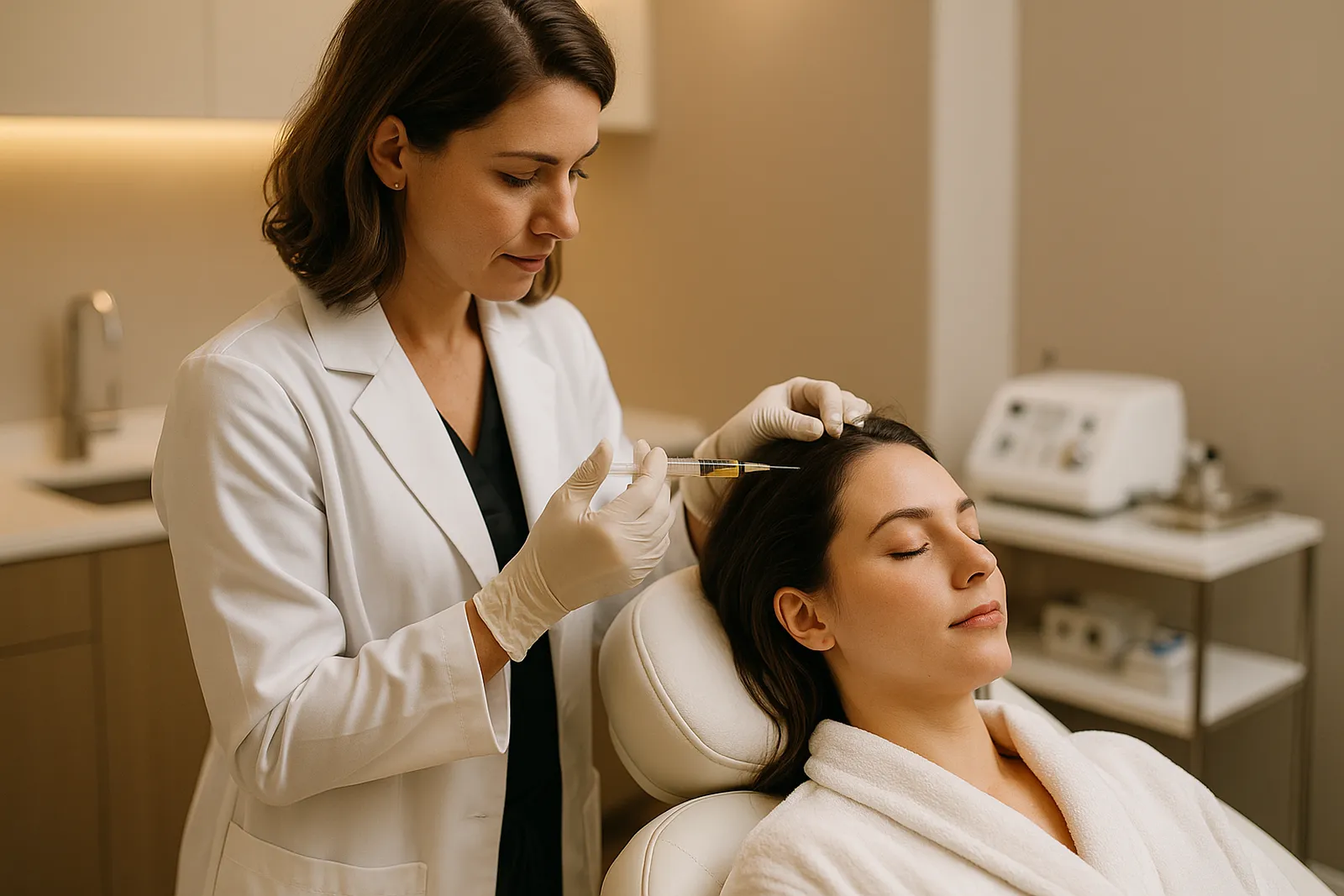
Non-Surgical Options: PRP Hair Restoration
Platelet-rich plasma therapy has emerged as one of the most effective non-surgical hair restoration treatments available. Unlike treatments designed to remove unwanted hair — such as laser hair removal — PRP focuses on stimulating dormant hair follicles to promote new growth. Because the treatment uses your body’s own biology, there’s virtually no risk of allergic reaction.
At Avellina Aesthetics, Dr. Berdichevskaya performs PRP hair restoration as a physician-administered treatment. She evaluates your hair loss pattern, determines whether you’re a good candidate for PRP, and develops a treatment protocol tailored to your specific situation. Most patients require three to four initial sessions followed by maintenance treatments to sustain results.
PRP vs. Hair Transplant: Understanding Your Options
Hair transplant surgery and PRP address hair loss through fundamentally different mechanisms. Transplants physically relocate hair follicles from donor areas to thinning areas — they’re surgical, require downtime, and are typically more expensive. PRP stimulates your existing follicles to produce thicker, stronger growth — it’s non-surgical, requires minimal downtime, and is significantly less invasive.
For patients with early to moderate thinning, PRP can produce excellent results without surgery. For advanced hair loss where follicles are no longer viable, transplant surgery may be more appropriate. Some patients use both — PRP to strengthen existing hair and optimize transplant results. Dr. Berdichevskaya can help you evaluate which approach, or combination, is right for your stage and pattern of hair loss.
What to Expect from Treatment
PRP hair restoration sessions take about 60 minutes and involve minimal discomfort. Results are gradual — decreased shedding within weeks, visible new growth over two to four months, and continued improvement over six to twelve months. Maintenance sessions every six to twelve months help sustain long-term results.
Ready to Book Your Consultation?
If you’re ready to explore your options or have questions about which treatment is right for you, contact Avellina Aesthetics to schedule a consultation with Dr. Violetta Berdichevskaya. Call us at (215) 722-6022 or visit avellinaaesthetics.com to get started.
Frequently Asked Questions
PRP uses concentrated growth factors from your own blood to stimulate hair follicles and promote natural regrowth.
They serve different purposes. PRP is ideal for early to moderate thinning. Transplants are better for advanced loss. Many patients benefit from both.
Most patients require three to four initial sessions spaced four to six weeks apart, with maintenance every six to twelve months.
With maintenance sessions, PRP results can be sustained long-term. Without maintenance, gradual thinning may resume over time.
Most patients experience minimal discomfort, especially with topical numbing applied beforehand.