
Fine lines have a way of showing up before you feel ready for them. Squinting through morning commutes on Huntingdon Pike, laughing with friends at a weekend barbecue, concentrating at your desk—every expression you make leaves a small trace over time. If those traces have started to bother you, Botox in Huntingdon Valley offers a proven, non-surgical way to soften them while keeping your face looking like you.
In short: Botox is an FDA-approved injectable that temporarily relaxes the small facial muscles responsible for expression lines. A session takes about 15 to 30 minutes, requires no downtime, and produces visible smoothing within 3 to 14 days that typically lasts 3 to 4 months. This page walks through how the treatment works, what it addresses, what an appointment feels like, and how to keep your results looking their best.
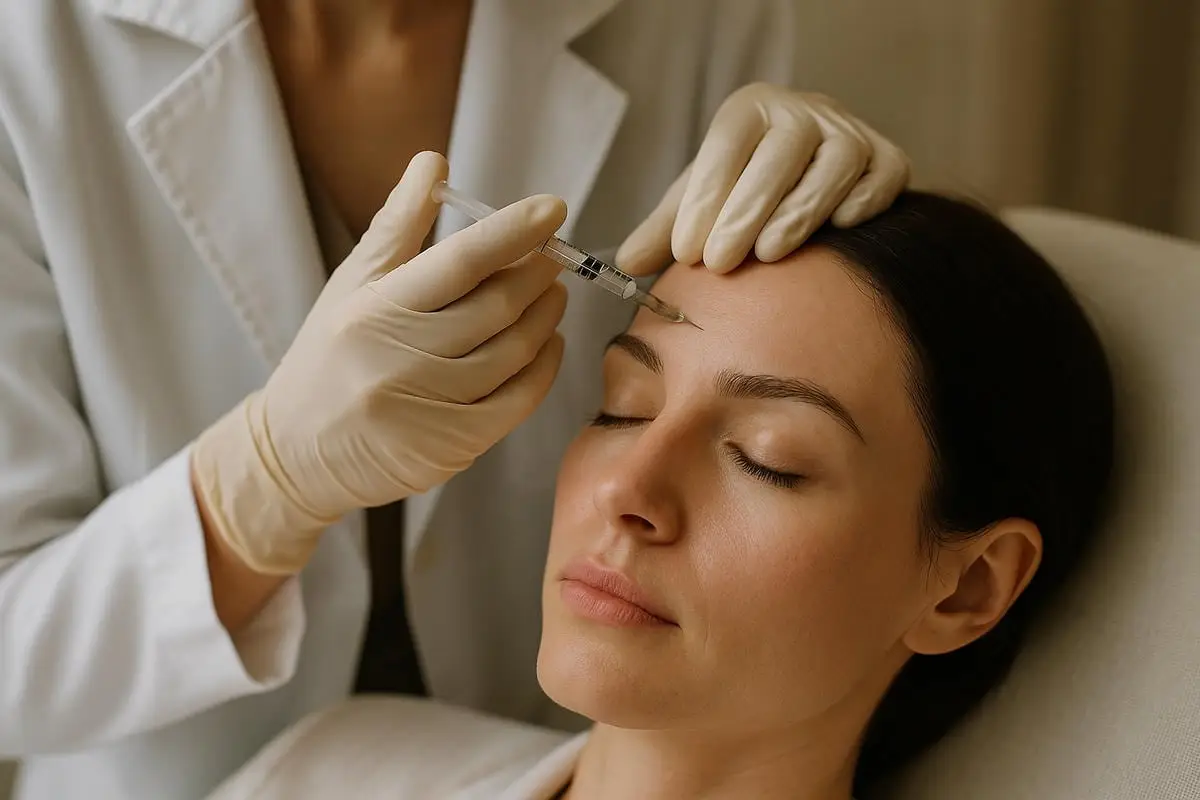
What Botox Is and How It Works
Botox is a purified form of botulinum toxin type A, a protein that blocks the nerve signals telling specific muscles to contract. When a trained injector places tiny, precise doses into the muscles that crease your skin, those muscles relax. The overlying skin then smooths out, and repeated folding—the process that etches lines deeper year after year—slows down.
The effect is targeted, not frozen. A skilled injector maps your unique muscle patterns and doses each point individually, so you can still raise your brows and smile naturally. A deeper look at the science behind these muscle-relaxing injections explains why precision placement matters just as much as the product itself.
Why Huntingdon Valley Residents Choose Botox
Neuromodulator treatments remain the most requested cosmetic procedure in the United States for good reason. For busy professionals and parents in the Huntingdon Valley area, the appeal comes down to a few practical advantages:
- No surgery, no downtime. You can book a session over lunch and return to work immediately.
- Fast, comfortable visits. Most appointments finish in under 30 minutes, and the needles used are extremely fine.
- Natural-looking outcomes. Conservative, well-placed dosing softens lines without erasing expression.
- Preventive benefits. Relaxing repetitive muscle movement early can slow the formation of deeper static wrinkles.
- Reversible by time. Because results fade gradually, treatment plans can be adjusted at every visit.
Common Treatment Areas
Botox is most often used on the upper face, where expression muscles are strongest and lines form earliest. A tour of the most frequently treated facial zones shows just how versatile the treatment has become. The classic areas include:
- Forehead lines — the horizontal creases that appear when you raise your eyebrows.
- Frown lines (glabellar lines) — the vertical “11s” between the brows.
- Crow’s feet — the fan of fine lines at the outer corners of the eyes.
- Brow lift — strategic dosing that opens and subtly elevates the brow.
- Bunny lines, chin dimpling, and gummy smile — smaller refinements that polish the overall result.
Beyond Wrinkles: Medical Applications
Cosmetic smoothing is only part of the story. The same mechanism that relaxes expression muscles also provides meaningful relief for chronic migraine sufferers, with injections placed at specific points around the head and neck.
Patients who struggle with embarrassing underarm or palm perspiration have another option as well. Neuromodulators are highly effective at calming overactive sweat glands, often reducing sweating dramatically for six months or longer per treatment.
What to Expect at Your Appointment
First-time patients are often surprised by how quick and low-key the experience is. For anyone feeling nervous, a walkthrough of a typical first session is a helpful primer before you arrive. The process follows a simple sequence:
- Consultation. Your injector reviews your medical history, discusses your goals, and studies how your facial muscles move.
- Treatment mapping. Injection points are marked based on your anatomy—not a one-size-fits-all template.
- Injections. A series of quick micro-injections is placed with an ultra-fine needle; most patients describe a brief pinch.
- Aftercare review. You receive clear instructions and can head straight back to your day.
- Follow-up. Results are assessed around the two-week mark, when the full effect has settled in.
How Long Results Last—and How to Protect Them
Smoothing typically begins within 3 to 5 days, reaches its peak by day 14, and holds for roughly 3 to 4 months before muscle movement gradually returns. Individual timelines vary, and the average duration of smoothing results depends on factors like dose, metabolism, muscle strength, and how expressive you naturally are.
The first 24 hours matter most. Staying upright for four hours, skipping strenuous exercise for a day, and avoiding rubbing or pressure on the treated areas all help the product settle exactly where it was placed. Before your visit, it is worth reviewing a complete rundown of post-treatment restrictions so nothing catches you off guard.
Over the long term, consistent maintenance appointments, daily sunscreen, good hydration, and not smoking all extend how fresh your results look between visits. Many patients find their results last longer after several rounds, as treated muscles gradually weaken from disuse.
Botox vs. Dermal Fillers: Which Do You Need?
These two injectables are frequently confused, but they solve different problems. Botox relaxes the muscles that create dynamic lines—creases that appear when you move your face. Dermal fillers restore lost volume, plumping static folds and hollow areas such as the cheeks, lips, and nasolabial folds. Many patients ultimately combine both for balanced rejuvenation, and a side-by-side comparison of wrinkle relaxers and volume-restoring injectables makes it easy to see where each one shines.
Is Botox Right for You?
Most healthy adults bothered by expression lines are good candidates. Treatment is generally not recommended during pregnancy or breastfeeding, for people with certain neuromuscular conditions, or when an active skin infection is present at the injection site. Choosing a physician-led clinic is the most important decision you can make, because outcomes depend far more on the injector’s anatomical skill than on the vial itself.
Key Takeaways at a Glance
- Botox temporarily relaxes expression muscles to smooth forehead lines, frown lines, and crow’s feet.
- Appointments take 15–30 minutes with no downtime; results appear within days and last 3–4 months.
- The treatment also addresses chronic migraines, excessive sweating, and gummy smiles.
- Injector expertise—not the product—determines how natural your results look.
- Simple aftercare and regular maintenance visits keep results consistent year-round.
Proudly Serving Huntingdon Valley and Nearby Communities
Patients visit from across the region for physician-administered injectable care, including Philadelphia, Southampton, Bucks County, Abington, Maryland, Delaware, and Huntingdon Valley. Wherever you are traveling from, the clinic’s location just off the Roosevelt Boulevard corridor keeps expert treatment within easy reach.
Ready to Love What You See in the Mirror?
Botox in Huntingdon Valley does not have to mean settling for rushed appointments or cookie-cutter results. With careful mapping, conservative dosing, and genuine medical oversight, you can soften the lines that bother you while staying unmistakably yourself. The team at Avellina Aesthetics welcomes new patients for personalized consultations—call (215) 722-6022 or book online to take the first step toward a smoother, refreshed look.
Frequently Asked Questions
Pricing is typically calculated per unit, with most upper-face treatments using 20 to 64 units depending on the areas treated and your muscle strength. Your exact plan and cost are confirmed during a consultation, so you know the total before treatment begins.
Avellina Aesthetics treats patients from Huntingdon Valley at its physician-led clinic on Woodward Street in Northeast Philadelphia—roughly a 15-minute drive down Huntingdon Pike. Appointments are available weekdays, with extended evening hours on Wednesdays.
Yes—when administered by a qualified medical professional. Botox has decades of FDA-approved use and an excellent safety record. Side effects are usually limited to minor, temporary redness or bruising at the injection sites. Choosing an experienced, medically trained injector minimizes risks like brow heaviness or asymmetry.
There is no universal right age. Many patients begin in their late 20s or 30s as a preventive measure, while others start in their 40s or 50s to soften established lines. The better question is whether visible expression lines bother you—if they do, a consultation can determine whether now is the right time.
Most patients rate the discomfort as minimal—a series of quick pinches lasting a second or two each. The needles used are among the finest in medicine, and ice or topical numbing can be applied for sensitive patients.
Plan for at least two weeks before a wedding, reunion, or photo session. That window allows the full effect to develop and gives time for any minor bruising to fade completely.
Absolutely. Botox pairs well with dermal fillers, microneedling, PRP facials, and PDO thread lifts. Combining modalities in a coordinated plan often produces more complete rejuvenation than any single treatment alone.
Not with proper technique. The frozen look comes from over-dosing or poor placement, not from Botox itself. A conservative, anatomy-based approach preserves your natural expressions while softening the lines you came in to treat.